Gillian's Blinds
Pleated Blinds for Conservatories, Patio Doors and Roof Glazing
Pleated blinds may share the same distinctive folded appearance, but they are not a one-size-fits-all product.
The way they are measured, supported and fitted depends on the window, door or roof glazing. The fabric and operating system must also suit the amount of light, privacy and shading required.
Over the last month or so, our team has completed three very different pleated-blind installations in Northampton, Wellingborough and Rugby. We fitted individual INTU pleated blinds around a curved conservatory, coordinated pleated blinds across double garden doors and side panels, and specialist supported pleated blinds beneath a large roof lantern.
These projects show that made-to-measure pleated blinds can be fitted to individual conservatory panes, glazed door panels and overhead roof glazing when the correct system is specified.
What Are Pleated Blinds?
Pleated blinds use fabric folded into crisp, even concertina-style pleats. This gives them a soft, streamlined appearance and allows the material to gather compactly when the blind is opened.
We supply and fit made-to-measure pleated blinds in a wide choice of colours, patterns, fabrics and fitting systems.
Depending on the selected fabric, pleated blinds can:
- Filter and soften incoming daylight
- Provide privacy
- Reduce glare
- Introduce a subtle colour or pattern
- Coordinate with other window dressings
- Retract neatly when more of the glazing needs to be visible
Neutral tones such as cream, grey and white help maximise filtered daylight, while darker colours generally reduce more light. Brighter and patterned fabrics can also be used when the blind is intended to become a feature within the room.
Pleated Fabric and Fitting Systems Are Not the Same Thing
The terminology surrounding blinds can sometimes be confusing.
“Pleated” describes the concertina-style fabric. It does not necessarily describe how the blind is attached to the window, door or roof glazing.
Pleated blinds can be fitted conventionally within a window recess or used within a specialist fitting system. For example, INTU blinds are available with pleated, roller or Venetian materials.
An INTU system fits closely against the individual pane without requiring drilling or screws. It moves with the window or door and is designed not to interfere with handles or normal operation.
Roof glazing requires another approach. The pleated fabric must be supported across the overhead opening rather than being allowed to hang down into the room.
These three recent installations all use pleated fabric, but each required a very different fitting solution.
INTU Pleated Conservatory Blinds in Northampton
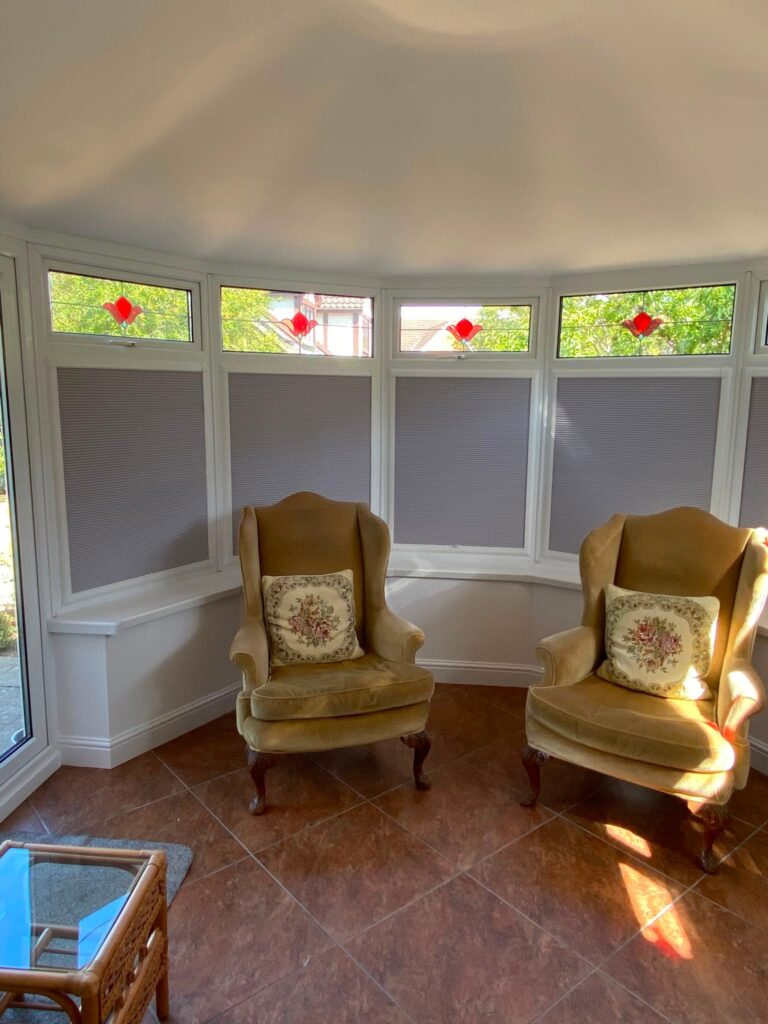
Our Northampton installation took place in a curved conservatory with several individual glazed sections.
The larger lower panes have been fitted with pleated blinds to provide privacy and controllable light. The smaller upper windows contain attractive red decorative glazing and were left uncovered, allowing these features to remain visible.
Rather than covering the entire curved wall with one continuous window treatment, we measured each of the larger lower panes individually. We then fitted soft grey pleated blinds within INTU frames.
The blinds sit closely against the glass, creating a neat finish that follows the shape and rhythm of the existing conservatory windows. Each lower pane has its own blind, while the decorative upper sections remain uncovered.
This arrangement allows daylight to continue entering through the smaller windows above. When the lower blinds are drawn, the pleated fabric provides privacy and softens the light entering the main seating area.
The grey fabric coordinates with the white window frames and the neutral colours already used throughout the room. Because each blind is fitted within its own frame, the installation retains the character of the curved glazing rather than hiding it.
This project demonstrates why individual specification matters. The solution provides privacy and light control across the main panes while preserving the decorative features that make the conservatory distinctive.
You can explore more options for conservatory blinds on our website.
Pleated Blinds for Double Garden Doors in Wellingborough
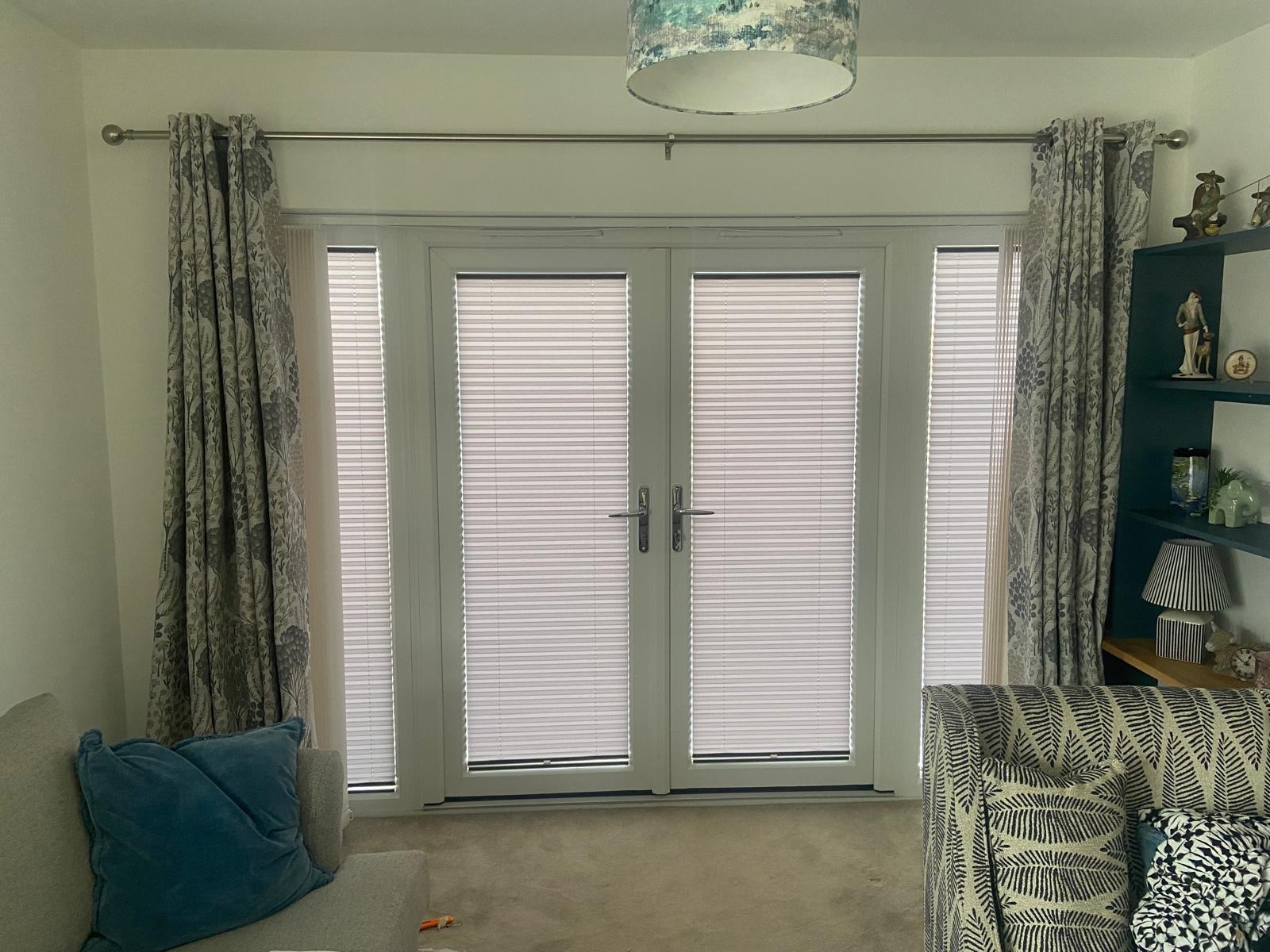
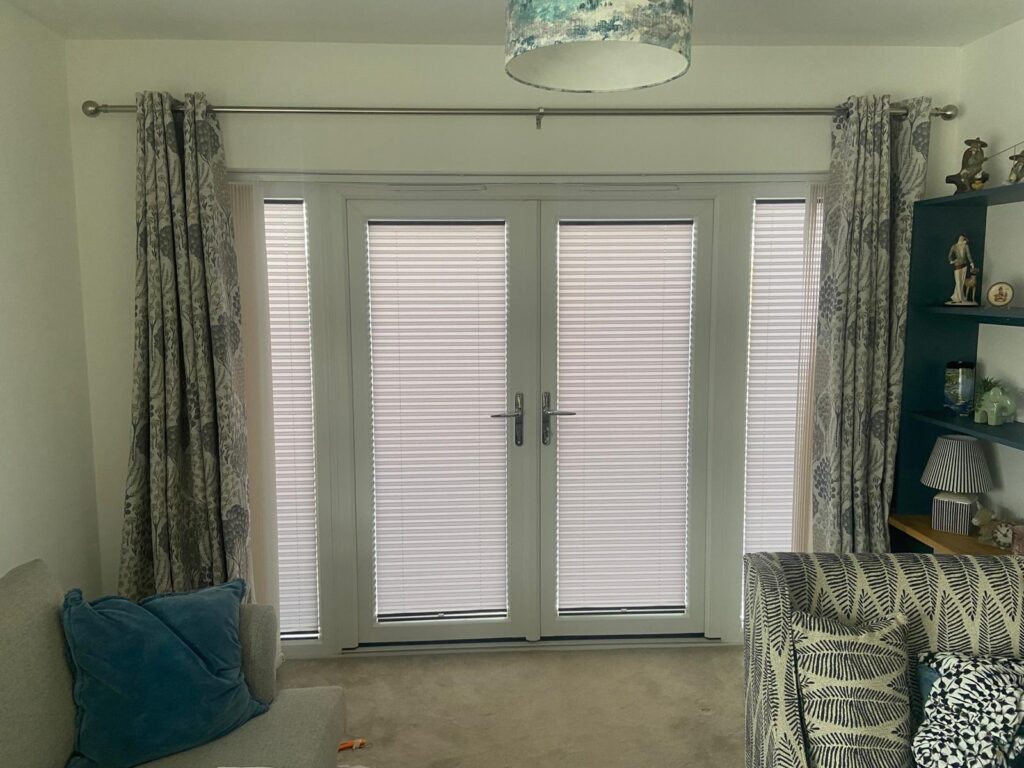
At this home in Wellingborough, the glazed area included a pair of double garden doors with narrower glazed panels on either side.
We measured all four glazed sections separately and fitted an individual pleated blind to each one.
The two larger blinds sit neatly against the glazed door panels, while narrower matching blinds cover the side panels. Together, the four blinds create a coordinated window treatment while allowing the doors to open and close normally.
The pale pleated fabric provides privacy and softens the incoming daylight without making the room feel closed in. The existing patterned curtains have also been retained, allowing the homeowner to combine both window treatments.
Fitting the blinds to the individual glazed sections means the doors remain practical to use. The handles are accessible, and the blinds move with the doors rather than obstructing the opening.
Although the four blinds coordinate visually, the two door panes and the two narrow side panels required their own accurate measurements.
This installation demonstrates how individually fitted pleated blinds can create a unified appearance across a multi-panel doorway while respecting the way each part of the opening functions.
See our wider range of options for patio-door blinds.
Pleated Roof-Lantern Blinds in Rugby
Our Rugby installation presented a completely different challenge.
A large glazed roof lantern brings valuable natural light into the room below. Pleated roof blinds provide the option to reduce the amount of overhead light and glare entering the space when required.
An ordinary window blind cannot simply be turned horizontally and fitted beneath roof glazing. Without the correct supporting system, the fabric would hang down rather than remaining neatly positioned against the opening.
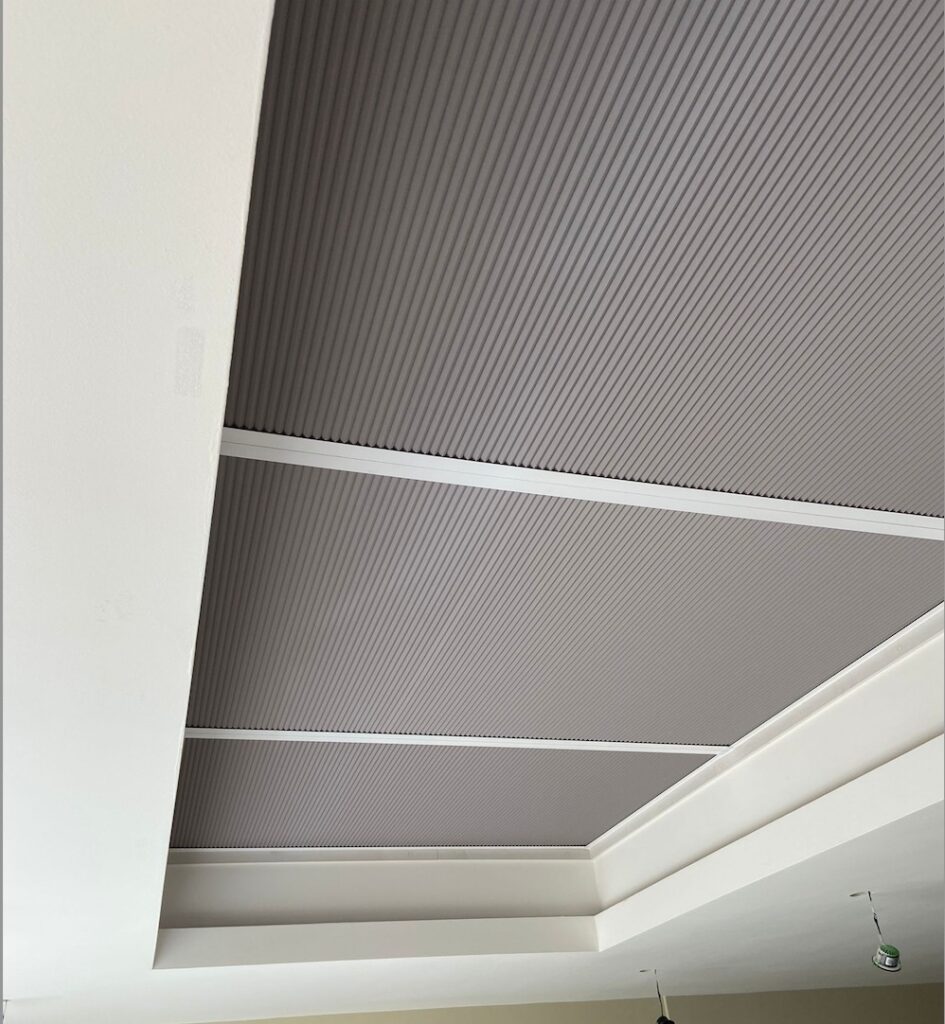
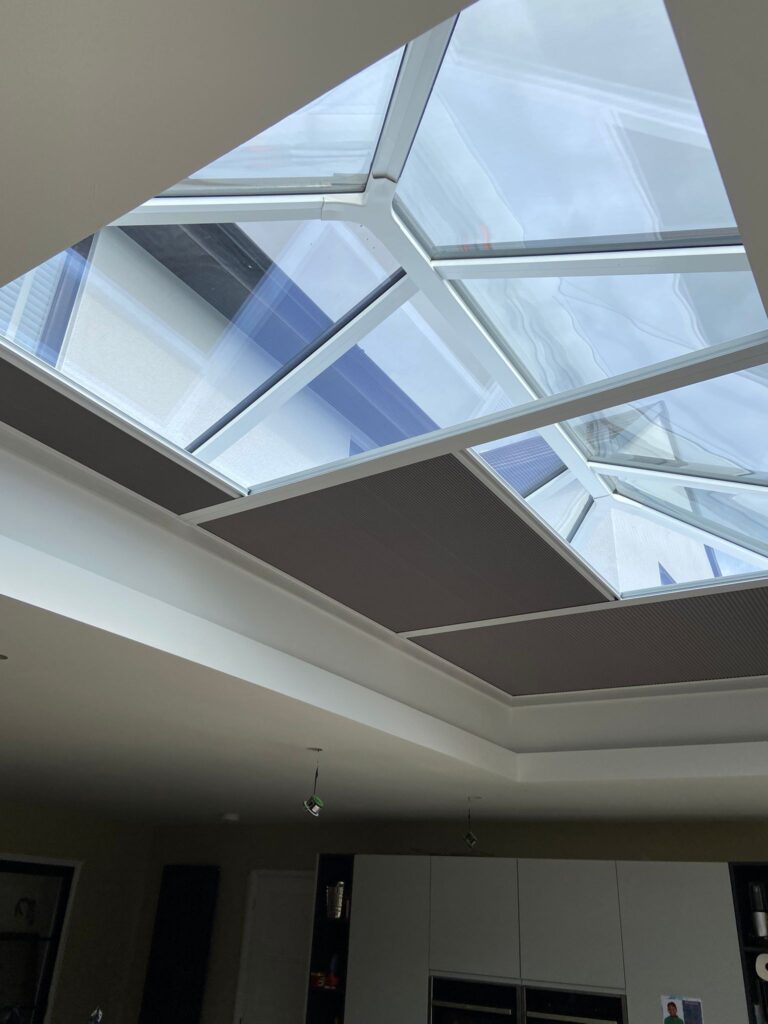
For this installation, we measured the separate sections of the roof lantern and fitted specialist supported pleated blinds beneath the glazing.
The grey pleated fabric is held securely across each section, while the white framework creates a clean division between the individual panels.
One photograph shows the roof blinds fully closed, providing extensive coverage across the complete lantern. The second shows several sections open, revealing the glazing above and demonstrating how the amount of incoming light can be adjusted.
The installation gives the homeowner flexibility. The blinds can provide shading when it is needed, while individual sections can be opened when more daylight is wanted.
The grey fabric coordinates with the room below, creating a neat feature when the blinds are closed rather than treating the roof covering as purely functional.
This installation required particularly accurate measuring and specification. Each section had to fit within the structure of the roof lantern, and the fabric needed to remain properly supported across the overhead glazing.
Three Homes, Three Different Pleated-Blind Solutions
These projects were all completed by our team within the last month or so, but none required the same fitting approach.
| Location | Type of glazing | Pleated-blind solution |
|---|---|---|
| Northampton | Curved conservatory windows | Individual INTU pleated blinds |
| Wellingborough | Double garden doors and side panels | Four coordinated pleated blinds |
| Rugby | Large glazed roof lantern | Specialist supported pleated roof blinds |
Choosing the pleated fabric is only one part of the process. We also need to consider the shape and position of the glazing, how the windows or doors operate, the level of privacy required and the amount of light or glare to be managed.
A professional measuring and consultation appointment allows us to recommend the right fitting system as well as a suitable fabric.
Choosing the Right Pleated-Blind Fabric
Pleated-blind fabric is available in a wide range of colours and patterns.
Before choosing, consider:
- How much daylight you want to retain
- Whether privacy is important
- The direction the room faces
- Whether direct sunlight causes glare
- Whether the blind will be fitted vertically or overhead
- The colours already used within the room
- Whether you want the blind to blend in or make a statement
Light neutral fabrics can help maintain a bright appearance while filtering the daylight. Darker shades may reduce more light and create a stronger visual feature. Pastel, bright and patterned fabrics provide further options.
During our free home-measuring appointments, we bring samples so you can compare colours, patterns and finishes in the room where the blinds will be fitted.
Why Professional Measuring and Fitting Matter
These recent installations demonstrate that pleated blinds must be specified for the glazing on which they will be used.
The curved Northampton conservatory required several individual measurements. The Wellingborough doors and side panels required four coordinated blinds in different widths. The Rugby roof lantern required a specialist supported system for overhead glazing.
Professional measuring and fitting help ensure that the blinds suit the opening, operate correctly and create a neat, coordinated finish.
Gillian’s Blinds is an independent, family-run business established in Northampton in 1989. Our pleated blinds are made in Northampton, and our measuring and fitting services are free. You simply pay for your chosen blinds.
Frequently Asked Questions About Pleated Blinds
What are pleated blinds?
Pleated blinds use fabric folded into even concertina-style pleats. The fabric gathers compactly when opened and can provide privacy, light filtering and glare control, depending on the material selected.
Can pleated blinds be fitted to conservatory windows?
Yes. Pleated blinds are a popular option for conservatories. Depending on the glazing, they may be fitted conventionally or within an INTU system. Each section should be assessed and measured individually.
What is the difference between pleated blinds and INTU blinds?
Pleated describes the folded fabric. INTU describes a fitting system that sits closely against an individual window or door pane. INTU blinds can contain pleated, roller or Venetian materials.
Can pleated blinds be fitted to patio doors?
Yes. Pleated blinds can be fitted to suitable patio and garden doors.
our team is ready
To help
Get in touch
Showroom
- 12 Low Farm Place, Northampton, NN3 6HY