Gillian's Blinds
How Do You Fit Blinds to Tilt-and-Turn Windows?
Tilt-and-turn windows are incredibly practical, but they can make choosing blinds feel a little more complicated.
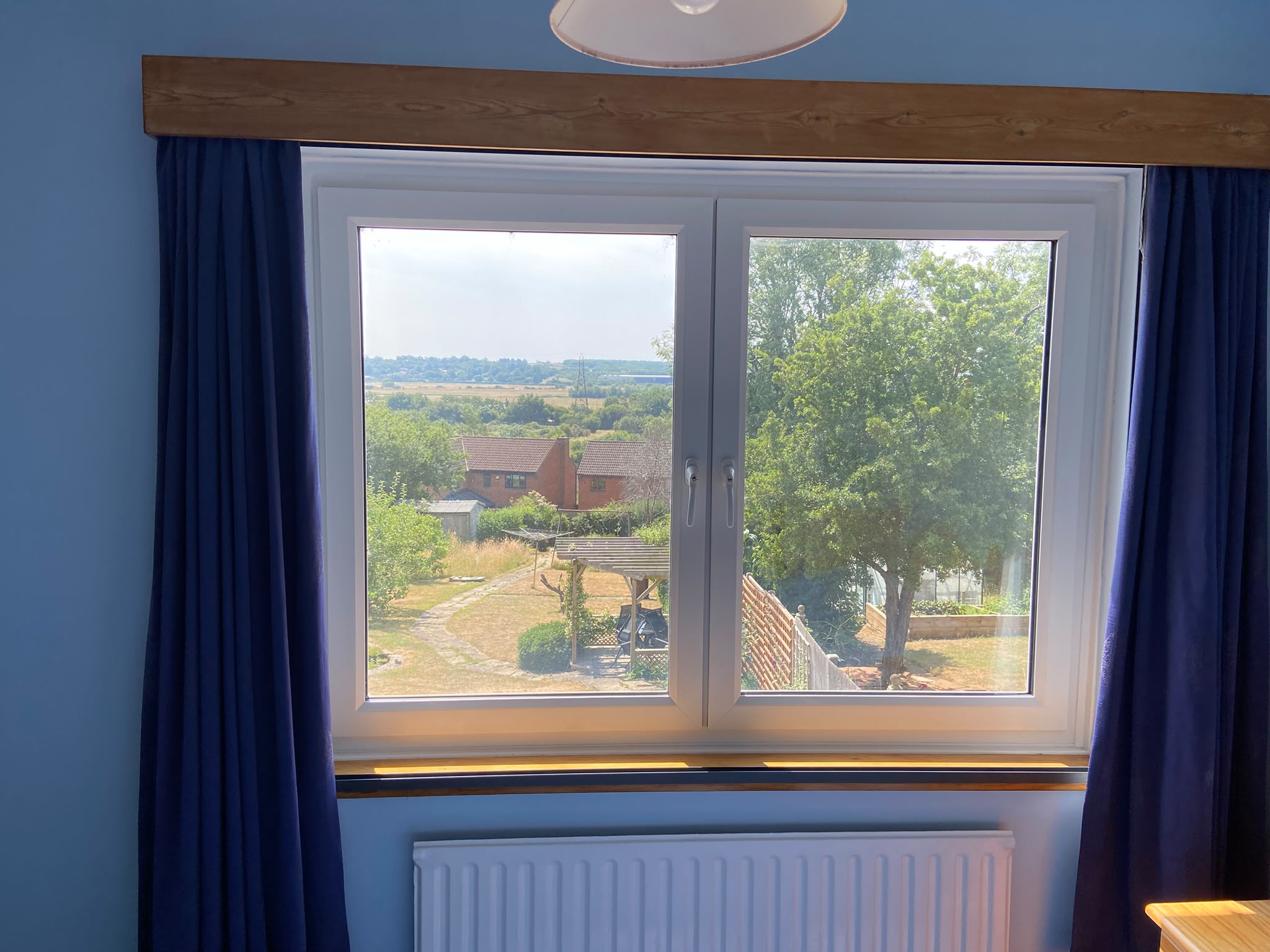
Unlike a standard window, a tilt-and-turn window has two opening positions. In the tilt position, the top of the sash angles inward to provide ventilation while much of the window remains in place. In the turn position, the sash opens fully inward, more like a door.
Because the window moves into the room, the important question isn't simply which blind will fit the window?
It's also:
Where should the blind sit, and do you want the blind or screen to remain in place while the window is tilted open?
The good news is that having tilt-and-turn windows doesn't automatically restrict you to one particular type of blind. Depending on the depth of the recess, the available clearance and how you want to use the window, there can be several different options.
Can You Fit Conventional Blinds to Tilt-and-Turn Windows?
Yes.
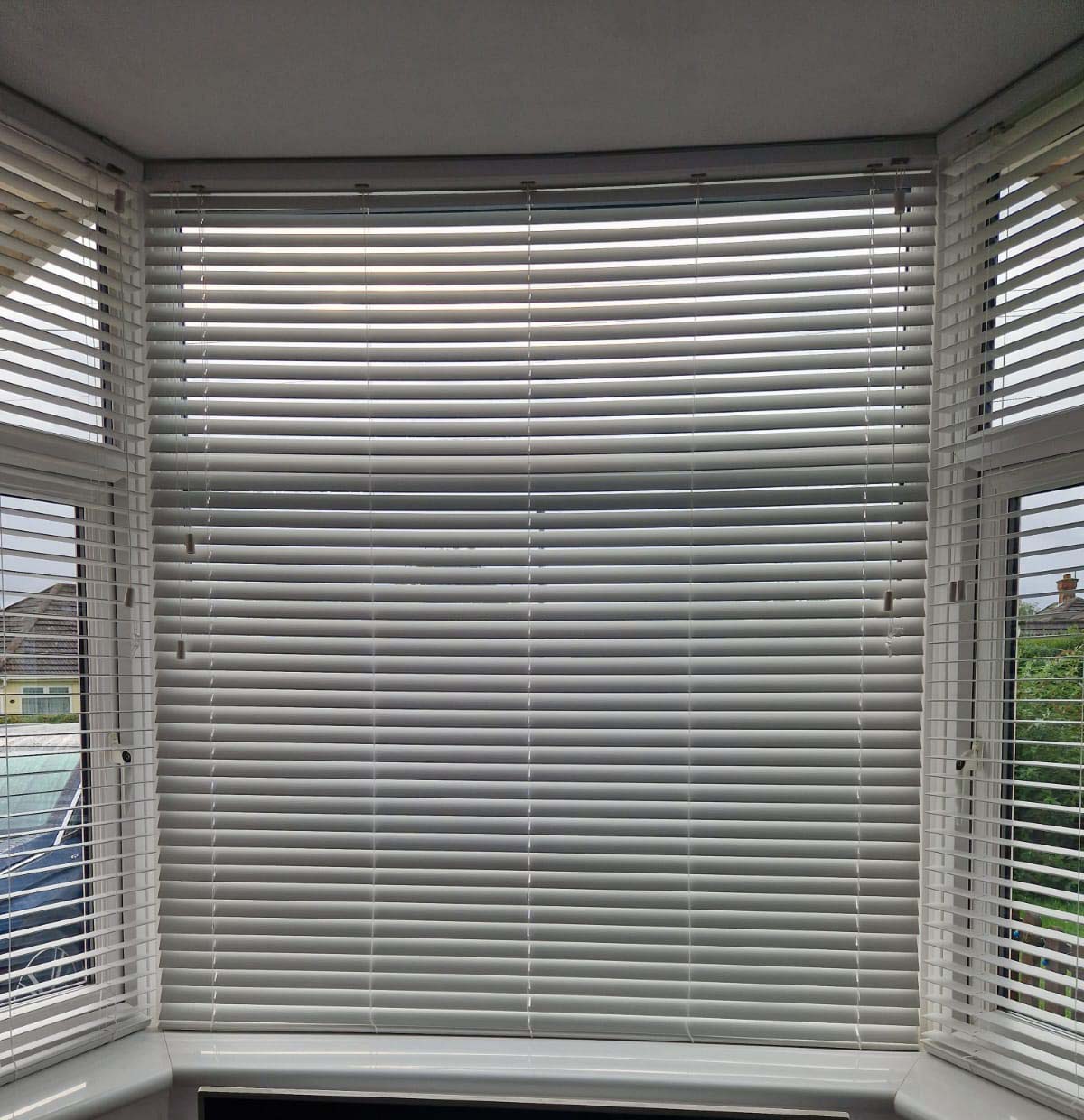
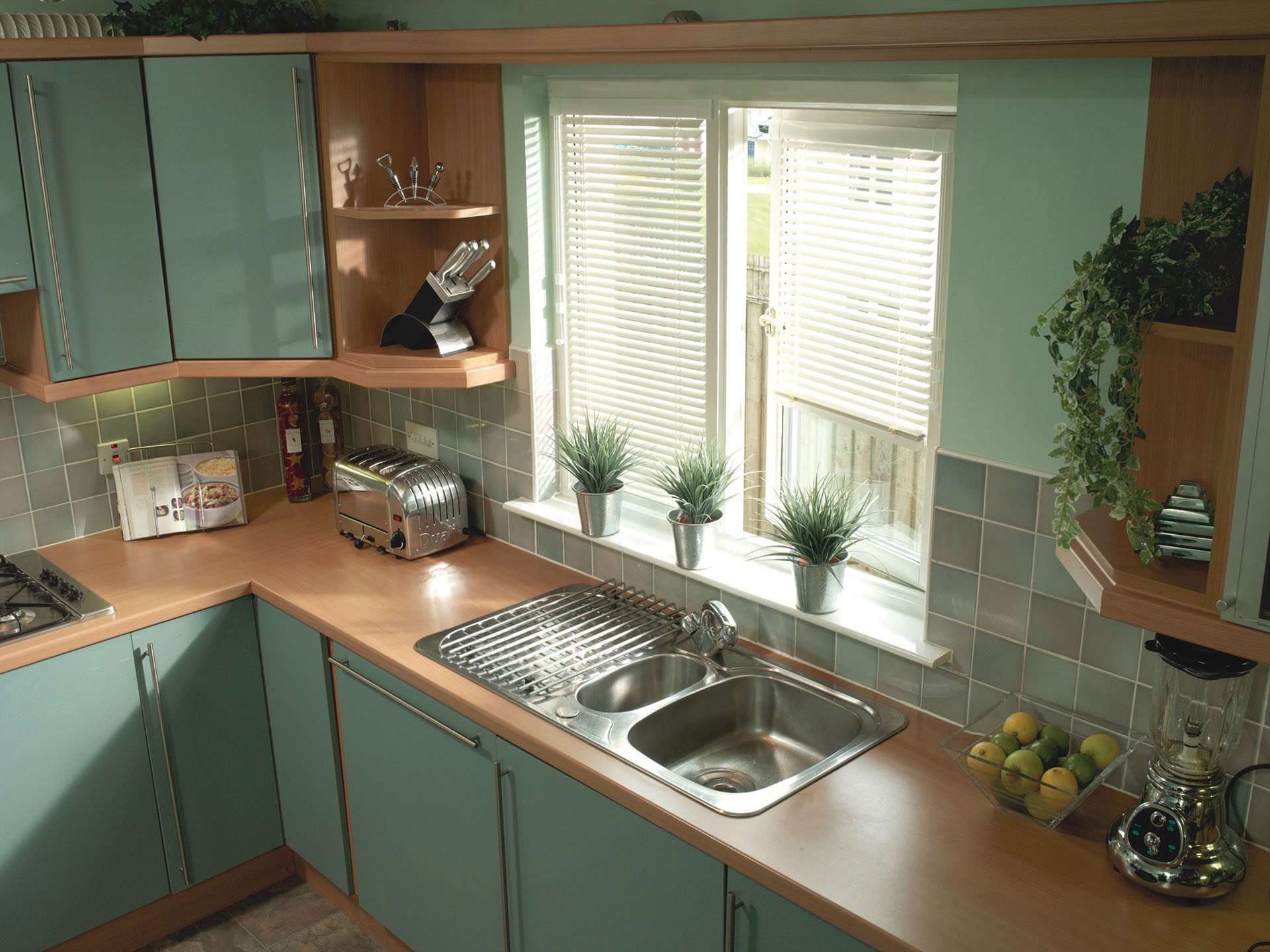
If your window has a sufficiently deep recess and there is enough clearance between the moving sash, window handles and blind, conventional blinds can work perfectly well.
Depending on the individual window, that could include:
The important caveat is that you may need to raise, retract or move the blind before tilting or fully opening the window.
For many homeowners, that's absolutely fine.
If you're happy to raise a Venetian blind or Roman blind before opening the window, there may be no reason to choose a specialist system simply because your windows happen to tilt and turn.
Why Does the Depth of the Window Recess Matter?
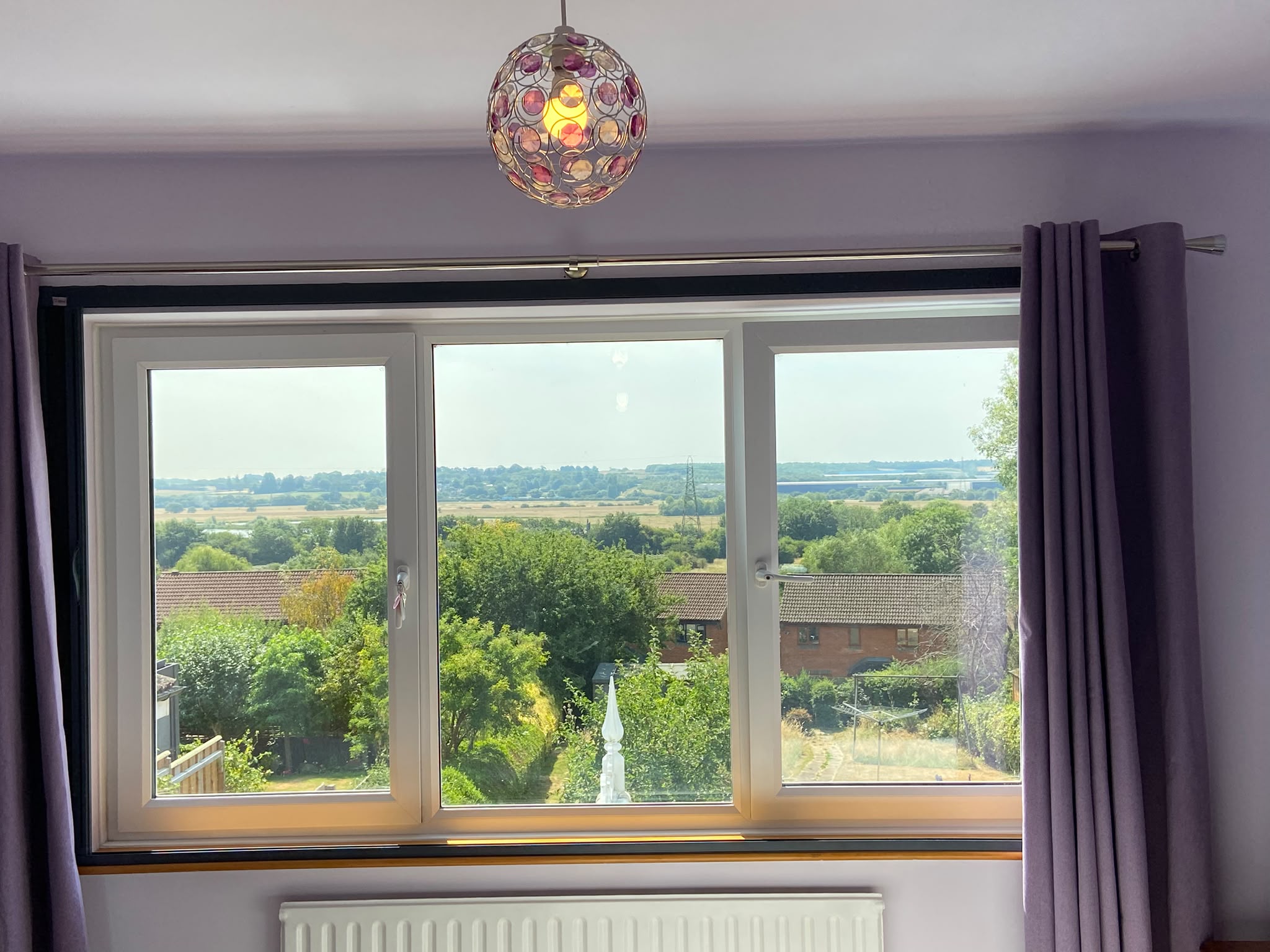
Two tilt-and-turn windows can look very similar but present completely different blind-fitting options.
A deep recess may provide enough space for the blind to sit towards the front while leaving sufficient room behind it for the sash to tilt and turn.
A shallower recess can be more challenging.
Suddenly the window sash, handle, blind and headrail may all be competing for the same limited space.
That means a blind could fit the width and drop of the window perfectly but still be completely unsuitable because it stops the window moving properly.
With tilt-and-turn windows, the depth of the recess and the movement of the sash are therefore just as important as the basic measurements.
The Big Question: Do You Want the Blind in Place While the Window Is Tilted?
This is one of the most important things to think about before choosing your blinds.
There are two very different requirements.
You're Happy to Move the Blind Before Opening the Window
In that case, a conventional inside-recess blind may work perfectly well if there is sufficient clearance.
Raise the Venetian blind, roll up the roller or lift the Roman blind, then tilt the window for ventilation.
Simple.
You Want the Window Tilted While the Opening Is Still Covered
That's a different requirement.
Perhaps you want:
- Fresh air without losing all your privacy
- Ventilation while reducing incoming light
- Airflow without inviting insects inside
- The window opening screened while the sash remains tilted
If that's how you want to use the window, the position of the blind or screen becomes much more important.
Three Ways to Fit Blinds Around a Tilt-and-Turn Window
There isn't one universal fitting method.
Broadly, there are three different approaches.
1. Fit a Conventional Blind Inside the Recess
Where there is enough depth and clearance, this can be the simplest option.
A Roman, roller, Venetian, vertical or pleated blind may all potentially work, depending on the individual window.
The advantage is that you can still choose from a broad range of blind styles.
The trade-off may simply be that the blind needs to be raised or moved before the window is tilted or fully opened.
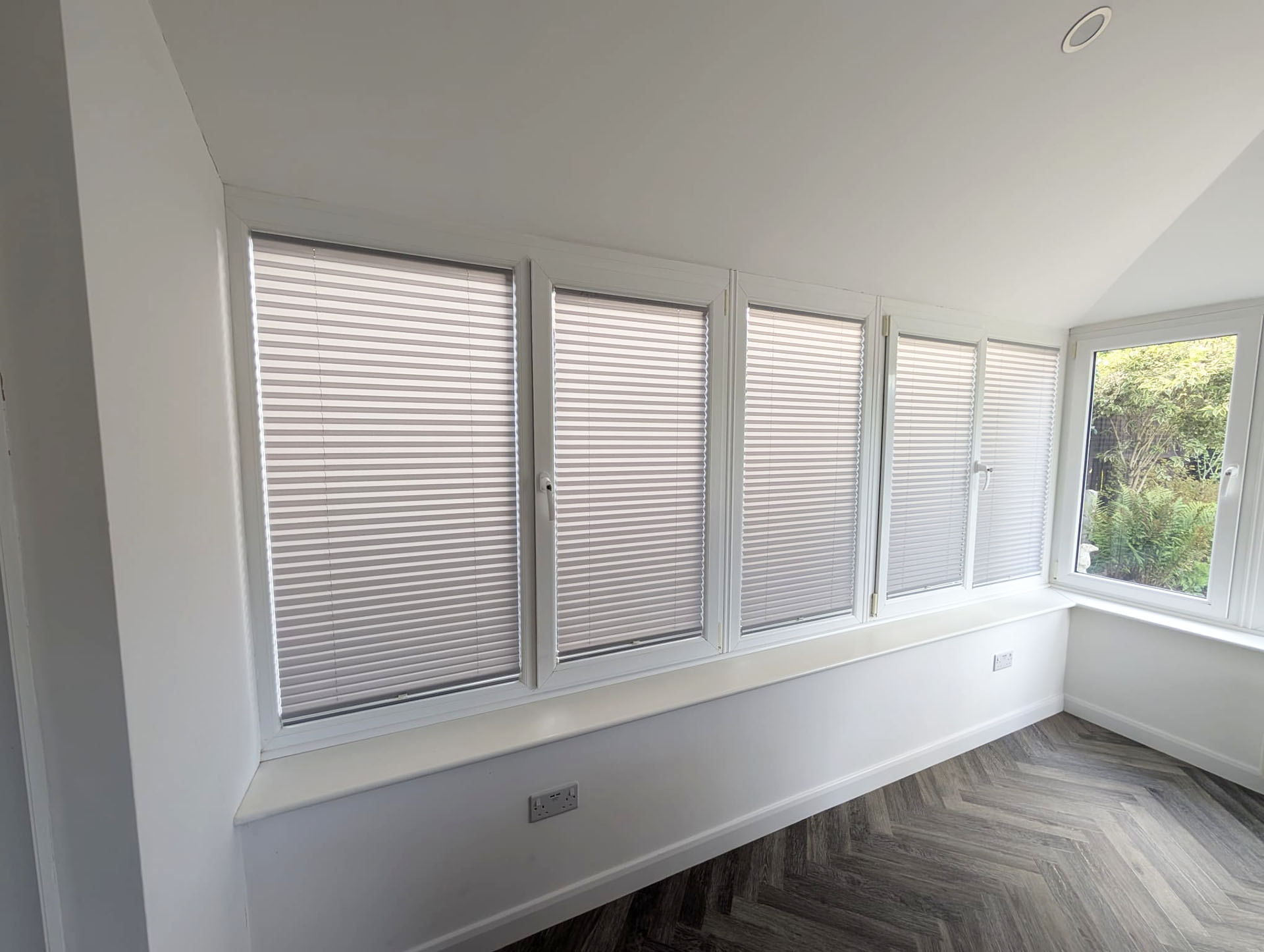
2. Fit the Blind Directly to the Window
Systems such as INTU take a different approach.
Instead of hanging independently in front of the sash, the blind sits closely against the glazing and moves with the window.
This can be especially useful when there isn’t enough room within the recess for a conventional blind.
However, there is an important distinction.
A blind that moves with the sash doesn’t continue covering the opening that is created when the window tilts.
So this approach is excellent when your priority is preventing the blind from interfering with the window.
It may not be the best option if your priority is keeping the opening screened while the window remains tilted.
3. Fit the Blind Outside the Recess
Another option is to position the blind or screen in front of the entire window opening, outside the recess.
That could potentially be a:
- Roman blind
- Roller blind
- Venetian blind
- Vertical blind
- Blind Screen®
- Other appropriate made-to-measure solution
Outside-recess fitting can solve two very different problems.
Sometimes there simply isn't enough room inside the recess for both the blind and the moving window.
But sometimes an outside-recess blind is chosen deliberately because it better suits the way the homeowner wants to use the window.
Why Choose an Outside-Recess Blind Even If an Inside-Recess Blind Would Fit?
Outside-recess fitting isn't simply a fallback option.
Imagine you have enough space for a Roman blind inside the recess.
If you're happy to raise it before tilting the window, that may work beautifully.
But what if you want to tilt the window for ventilation while still keeping something across the opening?
An outside-recess blind or screen operates independently of the window, which means the sash can potentially remain tilted behind it.
That creates a very different type of functionality.
Sometimes an outside-recess blind isn't chosen because nothing else will fit. It's chosen because it allows the window and window covering to do different jobs at the same time.
Can You Keep Insects Out While a Tilt-and-Turn Window Is Open?
This is a particularly useful example.
One of the main reasons people use the tilt function is ventilation.
You can open the top of the window and let fresh air circulate without opening the whole sash.
Unfortunately, open windows are also an invitation to flies, moths and other insects.
Blind Screen® Breeze In™ provides insect screening while still allowing airflow.
With an appropriately fitted outside-recess system, you can have:
The window tilted open, the screen deployed and fresh air coming in while helping to keep insects outside.
That's a very different benefit from simply finding a blind that doesn't get in the way of the window.
Can You Have Privacy While the Window Is Tilted?
Potentially, yes.
You may want ventilation in a ground-floor bedroom, living room or home office without leaving the entire opening exposed.
If the screen or blind is fitted independently from the moving sash, it can potentially remain across the opening while the window is tilted behind it.
The most suitable fabric or system will depend on whether your priority is privacy, softer light, blackout, insect protection or a combination of functions.
That's another reason to think about how you want to use the window before deciding which blind you need.
A Recent Outside-Recess Blind Screen® Installation
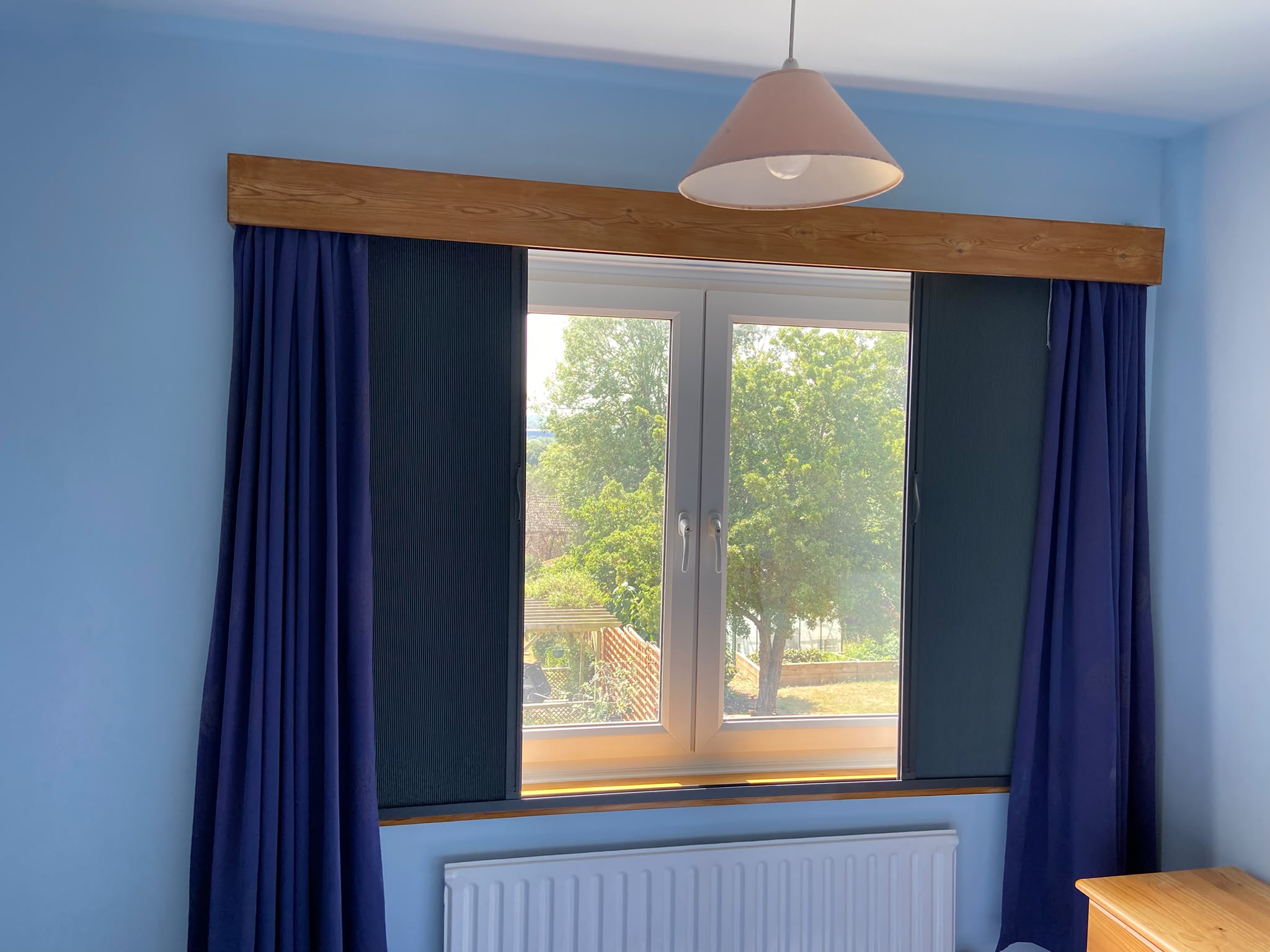
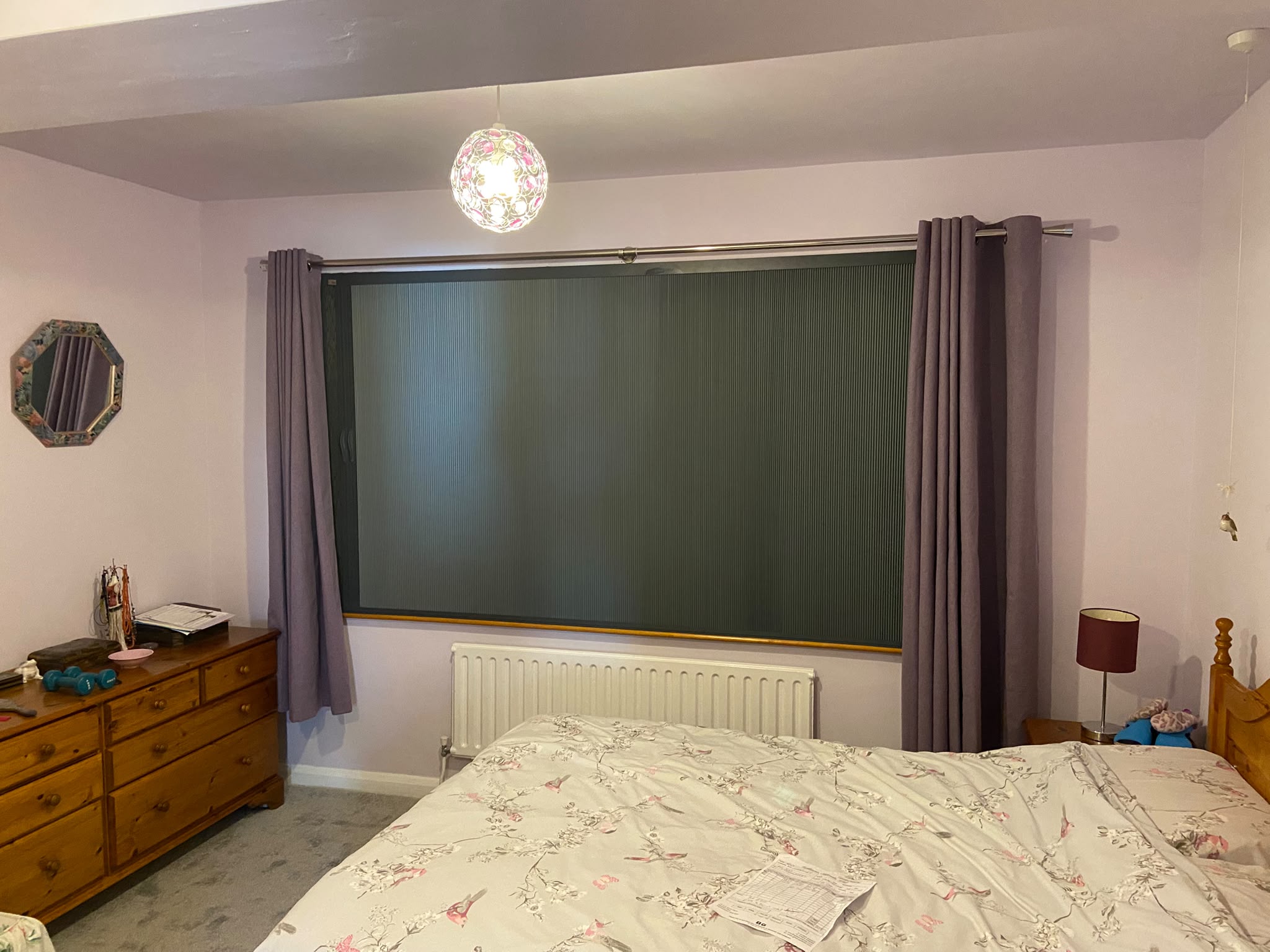
We recently fitted a Blind Screen® outside the recess of tilt-and-turn windows.
The screen was deliberately positioned in front of the complete opening, leaving the windows free to operate independently behind it.
That means the tilt-and-turn mechanism isn't competing for space with a blind inside the recess.
When the Blind Screen® isn't needed, it retracts neatly away.
When it is needed, the screen can provide the chosen function across the window opening without being attached to the moving sash.
It's a good example of how outside-recess fitting can be a deliberate practical choice, rather than simply the option used when something won't fit inside.
What About Blinds That Move With the Window?
Frame-fitting systems solve the same basic problem in a very different way.
An outside-recess blind stays independent of the moving window.
A system such as INTU sits closely against the glazing and moves with the window.
Both approaches can be useful.
The better choice depends on what you need.
If you want a neat blind that travels with the sash and doesn't interfere with opening and closing, a frame-fitting option may be ideal.
If you want the window open while the opening itself remains screened, an outside-recess system can offer functionality that a window-mounted blind cannot.
Is Outside-Recess Fitting Only Useful for Tilt-and-Turn Windows?
No.
The same principle applies to other windows where the movement of the sash affects where a blind can sit.
For example, vertically sliding sash windows need clear space for the sash to travel upwards.
If a blind fitted within the recess would obstruct that movement and there isn't enough depth to position the blind clear of the sash, fitting the blind outside the recess may provide a practical alternative.
The principle is the same:
Look at how the window moves first, then decide where the blind can sit.
Can You Have Blackout Blinds on Tilt-and-Turn Windows?
Yes.
Again, the right solution depends on how you want to use the window.
If blackout is mainly required when the window is closed, several conventional blackout blind styles may potentially work, depending on the dimensions and available clearance.
If you specifically want the window tilted while the covering remains deployed, the fitting position becomes more important.
Blind Screen® Light Seal™ provides one blackout option within the Blind Screen® system, while other blackout blinds may suit different windows and requirements.
You can explore the wider range of options on our Blackout Blinds page.
Which Blind Is Best for a Tilt-and-Turn Window?
There isn't one blind that is automatically best for every tilt-and-turn window.
Before choosing, it's worth considering:
- How deep is the recess?
- How far does the sash project when tilted?
- How does the window move when fully opened?
- Where are the handles?
- Is there enough clearance for an inside-recess blind?
- Are you happy to move the blind before opening the window?
- Do you want the covering to remain in place while the window is tilted?
- Do you want privacy while ventilating?
- Do you want fly protection?
- Do you need blackout?
- And, importantly, which style of blind do you actually like?
That last question matters too.
Practicality doesn't necessarily mean giving up the blind style you wanted.
A Roman blind, for example, could potentially be fitted inside a suitable deep recess or outside the recess if that arrangement works better with the movement of the window.
The goal is to find the right combination of blind style and fitting position for the way you actually use the window.
Why Does Professional Measuring Matter?
With tilt-and-turn windows, accurate measuring involves more than width and drop.
We also need to consider:
- Recess depth
- Sash movement
- Handle position
- Available fixing space
- Depth of the blind or headrail
- How far the window projects when tilted
- How you want the blind to operate
And there is one particularly useful question:
Do you want to use the window while the blind or screen remains deployed?
The answer can completely change which fitting position and blind systems are most suitable.
At Gillian's Blinds, our free home measure and quotation service gives us the opportunity to look at the actual window, see how it operates and talk through the way you want to use both the window and the blind.
Tilt-and-Turn Window Blinds: Frequently Asked Questions
Do Tilt-and-Turn Windows Need Special Blinds?
No.
Where there is sufficient clearance, conventional blinds can work perfectly well. Frame-fitting or outside-recess solutions become particularly useful where space is limited or where you want the blind or screen to remain deployed while the window is open.
Can Venetian Blinds Be Fitted to Tilt-and-Turn Windows?
Yes, potentially.
A conventional Venetian blind may work where the recess provides enough clearance and you're happy to raise it before tilting the window.
Frame-fitting Venetian options such as INTU may also be considered for suitable windows.
Can I Have a Fly Screen on a Tilt-and-Turn Window?
Yes.
Blind Screen® Breeze In™ provides insect screening while allowing airflow, making it particularly useful when you regularly use the tilt position for ventilation.
Are Outside-Recess Blinds Less Attractive?
No.
A professionally measured and fitted outside-recess blind can provide a very neat finished appearance.
The most appropriate fitting position depends on the window, the blind style and how you want to use them together.
Can Roman Blinds Be Fitted to Tilt-and-Turn Windows?
Potentially, yes.
Roman blinds may work inside a sufficiently deep recess, although you may need to raise the blind before tilting the window.
They can also be fitted outside the recess where that better suits the available space or the way you want to operate the window.
Can I Leave My Blind Closed While My Tilt-and-Turn Window Is Open?
It depends on the blind and where it is fitted.
If keeping the opening screened while the window is tilted is important to you, mention that during your home measure appointment because it can influence both the blind system and fitting position we recommend.
Can Blinds Be Fitted Outside the Window Recess?
Yes.
Outside-recess fitting may be used because there isn't enough room inside the recess, or simply because it gives you the functionality you want.
It is a normal fitting option rather than a compromise.
Need Blinds for Tilt-and-Turn Windows?
Don't assume that having tilt-and-turn windows automatically restricts your choice of blinds.
Sometimes a conventional blind fitted inside a generous recess will work beautifully.
Sometimes a blind that moves with the window is the neatest solution.
Sometimes the blind you really want, including a Roman blind, can simply be fitted outside the recess.
And sometimes an outside-recess screen provides additional functionality because you can tilt the window for ventilation while keeping the opening screened.
Gillian's Blinds has been helping customers choose made-to-measure blinds since 1989.
During our free home measure and quotation service, we'll look at how your window operates, the available space and what you want your blinds to do before talking you through the suitable styles and fitting options.
We provide free fitting across our entire blind range throughout Northamptonshire and Milton Keynes.
You can also visit our showroom at 12 Low Farm Place, Moulton Park Industrial Estate, Northampton NN3 6HY to explore the different blind styles and talk through your windows with our team.
To arrange your free home measure and quotation, call us on 01604 646007, email [email protected] or complete our contact form.
The window movement comes first. Then we find the blind and fitting position that work with it.
our team is ready
To help
Get in touch
Showroom
- 12 Low Farm Place, Northampton, NN3 6HY