Real Examples Across Four Homes
Blind Screen Installations in Northamptonshire
What Are Blind Screen (And Why Are More People Choosing Them?)
There’s a good chance you haven’t come across Blind Screen before.
They’re not as widely known as shutters or traditional blinds yet, which is interesting… because once people see them in real homes, they tend to get it immediately.
If you’ve not come across them before, that’s completely normal, most people haven’t until they see them installed and understand how they actually work.
This blog isn’t about selling them.
It’s about showing you what they actually do, how they behave in real spaces, and why more homeowners are quietly choosing them over the usual options.
If you want to explore the full product range alongside these examples, you can do that here: 👉 https://www.gilliansblinds.com/blinds-by-style/blind-screen
Rather than explain them in theory, we’re going to walk you through four real installations.
Each one is different:
- different types of windows and doors
- different rooms
- different priorities
Together, they give you a clear feel for what Blind Screen can actually do in real homes, not just in theory.
First, What Is a Blind Screen?
A Blind Screen is a sliding, fabric-based shading system that moves horizontally across windows or doors, offering flexible control over light, privacy, and airflow.
The simplest way to think about it is:
It’s a sliding, pleated fabric panel system that sits neatly within your window or door recess, moving side to side rather than up and down.
That sounds simple, but the experience is very different to standard blinds.
What makes Blind Screen different is how it moves and how much control that gives you compared to traditional blinds.
Instead of:
- pulling something up and down
- or tilting slats
You’re:
- gliding panels across
- controlling coverage side to side
- adjusting how open or enclosed your space feels
And that changes how people use them day-to-day.
We often find that once people understand this difference, it starts to make much more sense where Blind Screen fits, particularly in larger openings and more modern spaces.
Overstone Park – Full-Length Doors & Living With Light
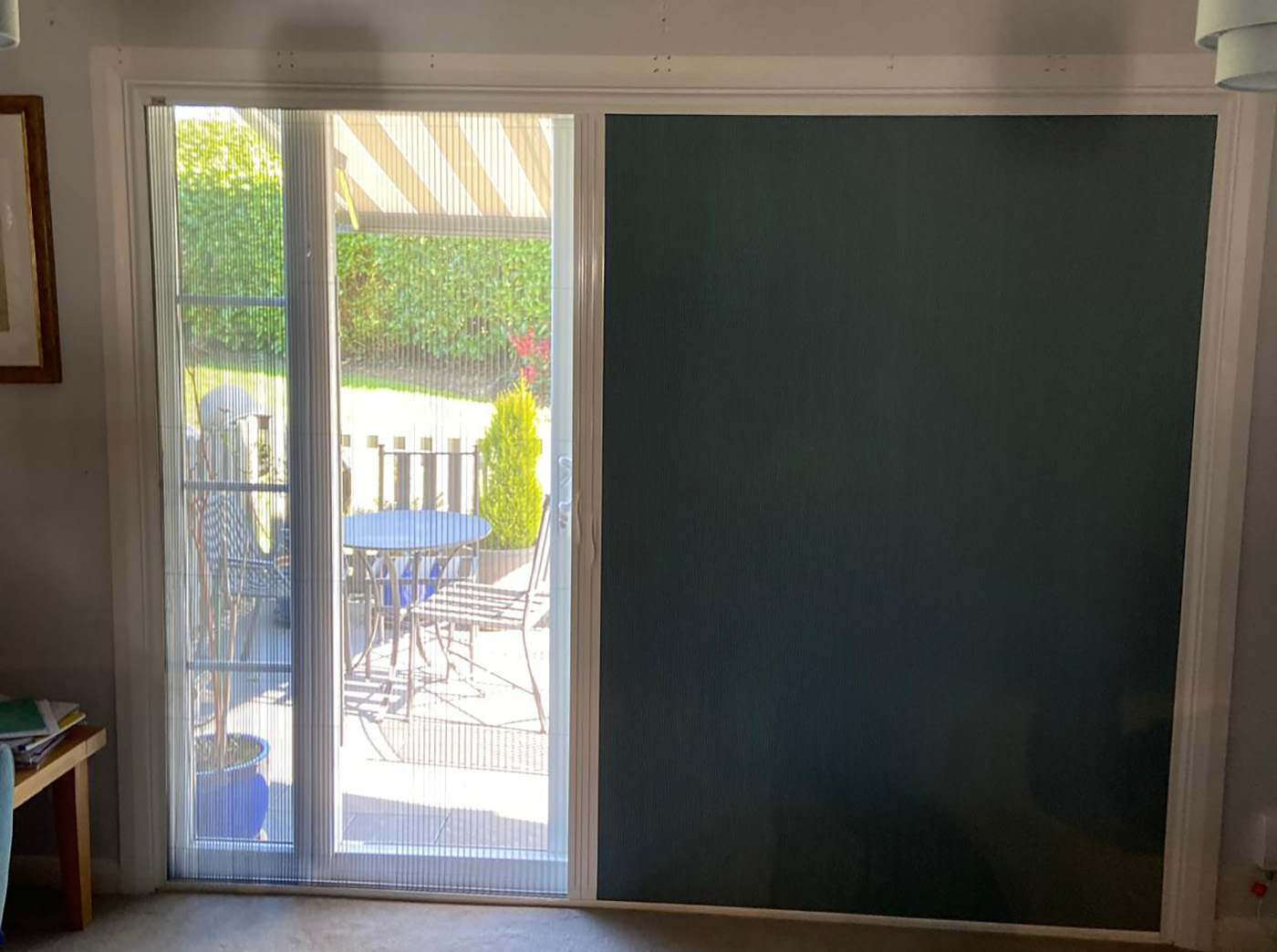
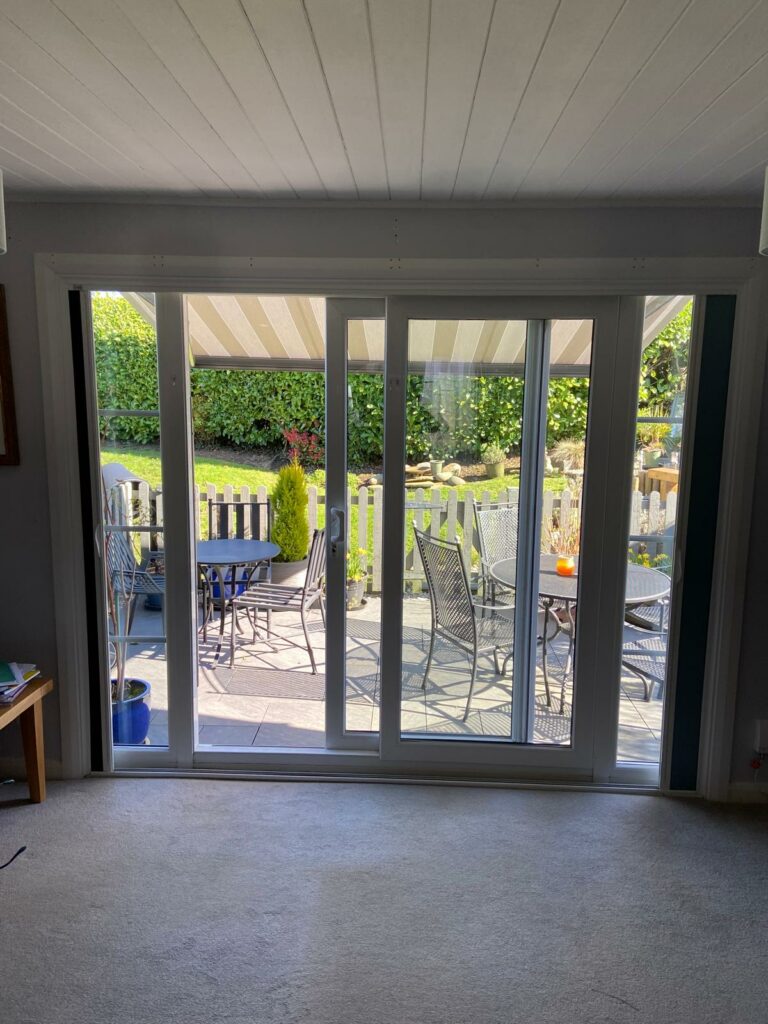
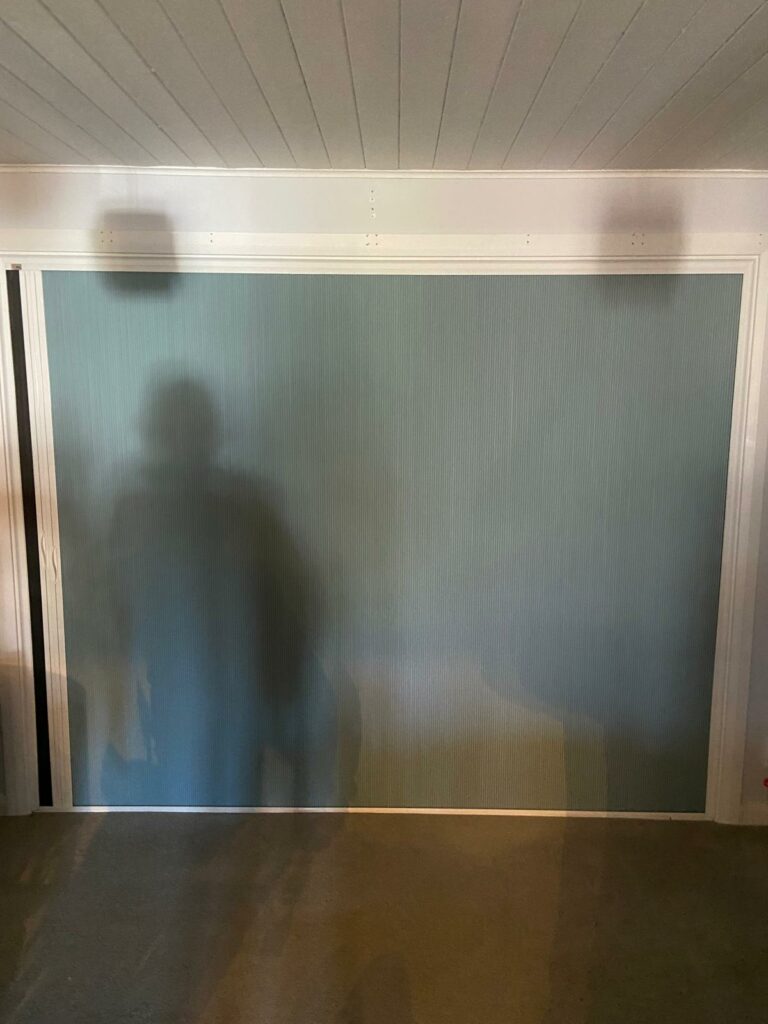
This first project was in Overstone Park, installed across full-length doors opening out into the garden.
This is where Blind Screen really start to make sense.
With large doors like this, we often see homeowners struggling with:
- glare at certain times of day
- feeling overlooked
- not wanting to fully “close off” the garden
Traditional blinds can feel quite all or nothing here.
What Blind Screen does instead is give you gradual control.
You can:
- leave one side open
- soften the light across the centre
- close off a section without losing the entire view
It becomes less about “open vs closed” and more about shaping the space depending on the moment.
But what’s particularly interesting in this installation is that the homeowner didn’t stop there.
Alongside the Blind Screen, they also opted for an integrated fly screen.
You’ll see this in the video and it’s one of those additions that makes a big difference day-to-day.
It means they can:
- open the doors fully
- let fresh air move through the space
- without worrying about insects coming in
So instead of choosing between:
doors open or blinds closed
they get:
airflow, light control, and protection, all working together.
This is a good example of how Blind Screen systems can be part of a wider, more considered setup rather than just a single product choice.

Kettering – Bedroom Blackout That Actually Works
This installation in Kettering was all about one thing:
Sleep.
The brief was simple, make the room properly dark.
Not “dim”. Not “better than before”.
Proper blackout.
Blind Screen works particularly well in bedrooms because:
- it sits neatly within the window recess
- it reduces light gaps around the edges
- the fabric provides consistent coverage across the full opening
What we often hear from customers is frustration with blackout blinds that don’t quite deliver.
There’s usually:
- light bleed
- gaps at the sides
- uneven coverage
With this setup, the result feels much more contained.
And for bedrooms, that’s often the difference between:
“This helps a bit”
and
“This actually works.”
This is why Blind Screen is increasingly being used as a blackout blind alternative for bedrooms.
Wellingborough – Softer Look, Same Outcome
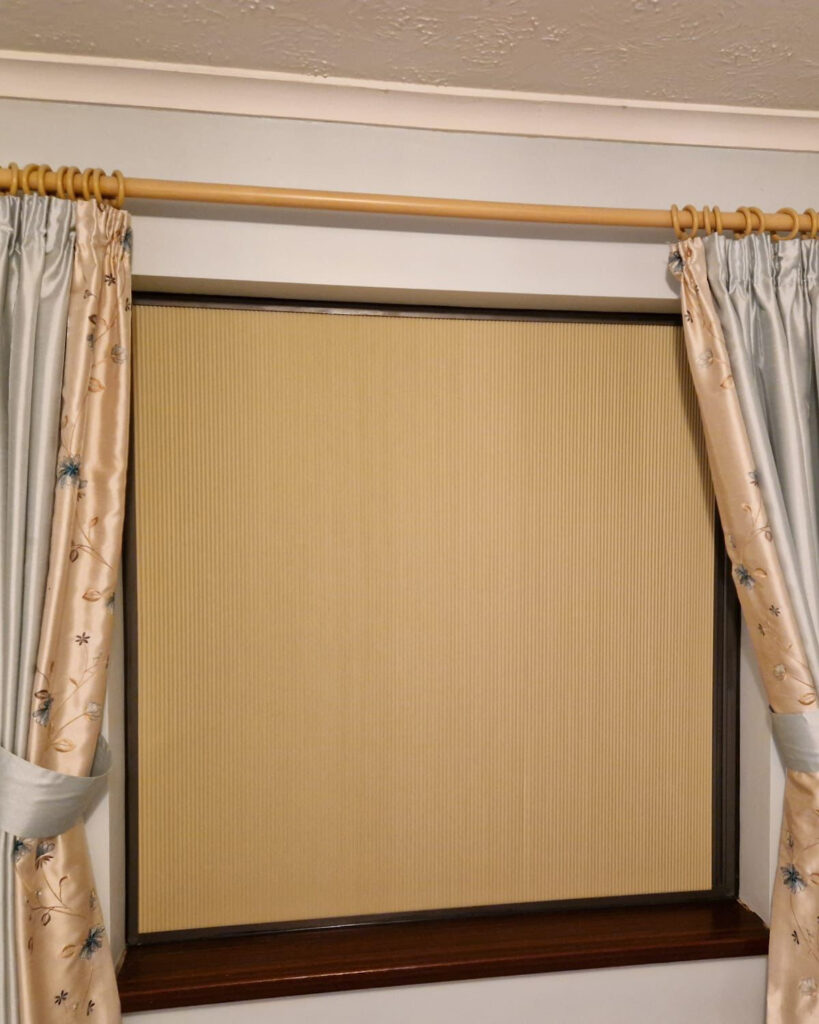
This second bedroom project in Wellingborough had the same functional goal:
👉 blackout for better sleep
But the approach was different.
Instead of a darker, more functional look, the homeowner wanted something that:
- blended into the room
- felt softer
- didn’t dominate the space
So, we used a more neutral tone.
This is something we talk about a lot with customers, performance is important, but so is how it looks once it’s in.
Blind Screen gives you that flexibility:
- same performance
- different aesthetic outcome
And that matters, because once something is installed, you don’t just use it… you live with it every day.
Wellingborough – Layered Control (Blind Screen System + Venetians)
This final project is probably the most interesting.
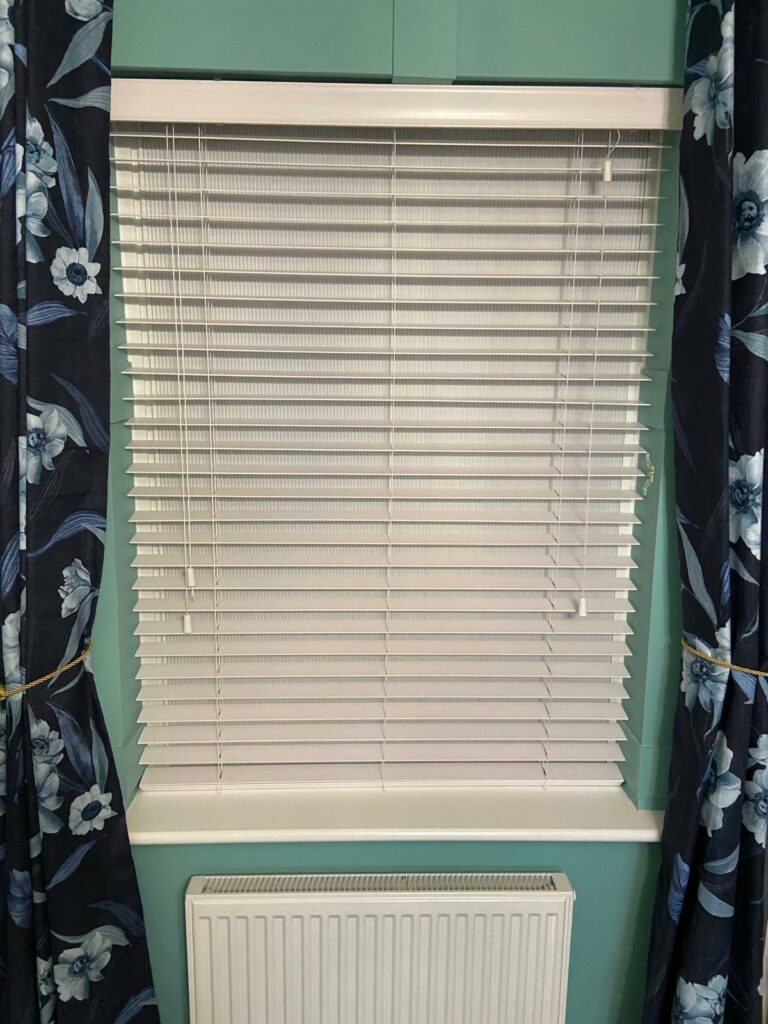
Also in Wellingborough, but this time we combined:
- a Blind Screen system behind
- Venetian blinds at the front
At first, that might sound like overkill.
But in reality, it creates something people often want but struggle to achieve:
real flexibility.
Here’s how it works:
- The Blind Screen handles:
- privacy
- light diffusion
- full coverage when needed
- The Venetians handle:
- fine light control
- directional light
- softer daytime adjustment
So instead of one solution trying to do everything, you get:
👉 layered control
Which means:
- bright but private mornings
- softened afternoon light
- full blackout in the evening
This kind of setup works particularly well for people looking for a flexible window covering solution for changing light throughout the day.
Why Are Blind Screen Becoming More Popular?
It’s not because they’re “new”.
It’s because they solve a set of frustrations we hear all the time:
- “I don’t want to lose the view, but I need privacy”
- “I want light, just not that much light”
- “Blackout blinds never quite block everything”
- “Curtains feel too heavy for this space”
Blind Screen sits somewhere in the middle.
It’s:
- cleaner than curtains
- more flexible than roller blinds
- less fixed than shutters
Unlike shutters, Blind Screen doesn’t lock your space into one position — it adapts with how you use the room.
And once people see it in real homes, the reaction is usually the same:
“Oh… that actually makes sense.”
Made-to-Measure, Gold Partner Installation & What That Means
Blind Screen is not an off-the-shelf product.
As a Gold Partner installer, we’re able to offer the full Blind Screen system, along with expert advice on how it will work in your specific space.
Every installation is:
- made to measure
- fitted neatly within the window or door recess
- designed to suit how you actually use the room
We also provide a free home measuring and fitting service, so you can:
- see samples in your own space
- understand how the system will work
- make the right decision without guesswork
For a product like this, that level of support makes a real difference.
Are They Right For Every Window?
No, and it’s important to be honest about that.
Blind Screen works best when:
- you have larger windows or doors
- you want side-to-side control
- you’re balancing light, privacy, and openness
They’re not always the best fit for:
- smaller windows
- highly decorative spaces where fabric is the feature
- situations where a fixed solution is preferred
But in the right setting, they solve problems that other blinds don’t quite handle as well.
If You’re Curious…
If you’ve read this and found yourself thinking:
“that might actually work in our space…”
Then it’s worth taking a closer look here:
👉 see the full Blind Screen range here
Or just have a conversation with us.
Because with something like this, the decision usually isn’t made from a spec sheet.
It’s made when you can picture:
- how it will move
- how it will feel
- how it will change the way you use the room
Blind Screen Frequently Asked Questions
Are Blind Screen suitable for large doors?
Yes, they work particularly well across larger openings such as bifold doors and patio doors, where side-to-side movement offers more flexibility than traditional blinds.
Can Blind Screen be used as blackout blinds?
Yes, they can be very effective in bedrooms, especially when fitted neatly within the recess to minimise light gaps.
How is Blind Screen different from shutters?
Shutters are fixed within the window and operate by tilting slats, whereas Blind Screen moves across the space, giving more flexible coverage and a softer finish.
Can Blind Screen be combined with other blinds?
Yes, as shown in the Wellingborough project, they can be layered with other blinds such as Venetians to create more control.
Are Blind Screen suitable for everyday use?
Yes, they are designed for regular use and provide a smooth, low-profile operation that works well in busy living spaces.
Do Blind Screen block the view completely?
No, one of the key benefits is that you can partially cover the space, allowing you to maintain your view while still controlling light and privacy.
our team is ready
To help
Get in touch
Showroom
- 12 Low Farm Place, Northampton, NN3 6HY